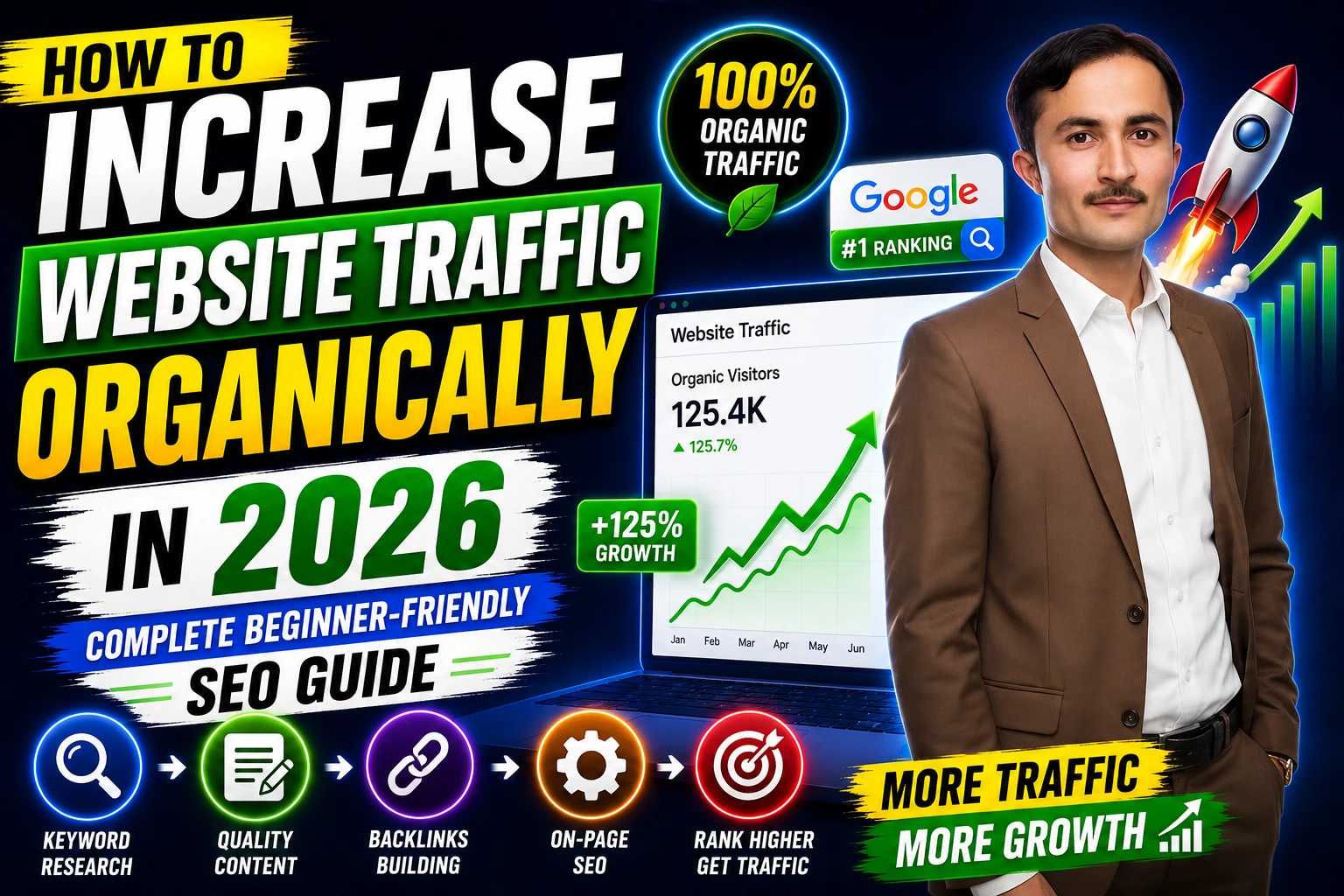
How to Increase Website Traffic Organically in 2026 (Complete Beginner-Friendly SEO Guide)
Introduction
Every website owner wants more traffic. In 2026, organic traffic is one of the best ways to grow a website because it brings real visitors from search engines like Google without paying for ads.
Many beginners create websites and publish articles, but they struggle to get visitors because they do not understand how organic traffic works.
The good news is that increasing website traffic organically is possible if you follow the right SEO strategies consistently.
In this complete guide, you will learn how to increase website traffic organically step by step, even if your website is new. This article is written in simple English, beginner-friendly style, and follows AdSense-safe content practices.
What is Organic Traffic?
Organic traffic means visitors who come to your website naturally from search engines without paid advertisements.
👉 Example:
If someone searches:
“how to start blogging”
And clicks your website on Google: ➡️ That is organic traffic.
How to Increase Website Traffic Organically in 2026 (Complete Beginner-Friendly SEO Guide)
If you’re just starting your online journey, learning How to Increase Website Traffic Organically in 2026 (Complete Beginner-Friendly SEO Guide) is the smartest investment you can make. Paid ads give quick results, but organic traffic is sustainable, cost-effective, and builds long-term authority. However, SEO in 2026 looks very different from just a few years ago. With AI-powered search engines, Google’s Search Generative Experience (SGE), and evolving user expectations, beginners need a fresh, practical roadmap. This guide strips away the complexity and gives you actionable steps to grow your website traffic without spending a dime on ads.
1. Start with Search Intent, Not Just Keywords
Before writing a single word, ask yourself: What is the user really looking for? In 2026, search engines are exceptionally good at understanding intent—informational, navigational, commercial, or transactional. Many beginners make the mistake of targeting high-volume keywords without matching what users actually need.
For example, someone searching “best running shoes” likely wants product comparisons (commercial intent), while “how to tie running shoes” requires a step-by-step tutorial (informational intent). When you align your content with intent, search engines reward you with better rankings. Use tools like AnswerThePublic, Reddit, or Google’s “People also ask” to uncover real questions. Map each piece of content to a specific stage of the buyer’s journey. This foundation makes every other tactic in How to Increase Website Traffic Organically in 2026 (Complete Beginner-Friendly SEO Guide) more effective.
2. Optimize for AI Search and SGE (Search Generative Experience)
By 2026, a significant portion of searches never click through to a website because Google’s SGE provides direct answers on the search results page. To win organic traffic, your content must be the source that AI models trust. How? Focus on original research, expert quotes, and unique data. AI-generated fluff is easily detected and de-prioritized.
Structure your articles with clear headings (H2, H3), bullet points, and tables so that Google can extract snippets for featured answers. Also, include FAQ schema markup—this helps AI identify your content as a reliable answer source. Remember, if you aren’t cited in AI overviews, you’re losing traffic. So write for humans first, but structure for machines. This is a non-negotiable part of How to Increase Website Traffic Organically in 2026 (Complete Beginner-Friendly SEO Guide).
3. Master EEAT: Experience, Expertise, Authoritativeness, Trustworthiness
Google’s EEAT framework is more critical than ever. Beginners often think EEAT is only for YMYL (Your Money Your Life) niches, but in 2026 it affects every website. You don’t need a PhD—just demonstrate real-world experience. Write an “About Me” page with your credentials. Include case studies, original screenshots, and customer testimonials. Link to trustworthy external sources (like .gov or .edu sites when relevant).
Also, update your content regularly. Stale pages lose EEAT trust. Even a small “Last updated” timestamp with a few fresh sentences signals activity. For local businesses, add physical address and real customer reviews. These trust signals directly impact how How to Increase Website Traffic Organically in 2026 (Complete Beginner-Friendly SEO Guide) works for you.
4. Build Topical Authority with Pillar Pages and Clusters
Gone are the days of targeting one keyword per page. In 2026, search engines reward websites that cover a topic comprehensively. Create a pillar page – a long, thorough guide on a broad topic (e.g., “Indoor Plant Care”). Then build cluster content – smaller articles linking back to the pillar (e.g., “How to Water Succulents”, “Best Soil for Monsteras”). Interlink them using descriptive anchor text.
This “hub and spoke” model tells Google you’re an authority. Start with 1 pillar and 3–4 clusters, then expand. For beginners, this method also improves user engagement because visitors can easily dive deeper. Planning your content this way is a cornerstone of How to Increase Website Traffic Organically in 2026 (Complete Beginner-Friendly SEO Guide).
5. Prioritize Core Web Vitals and Mobile-First Design
Speed matters. A one-second delay in loading can cut conversions by 20% and increase bounce rates. In 2026, Google’s Core Web Vitals (LCP, FID, CLS) are mandatory ranking factors. Use free tools like PageSpeed Insights or Lighthouse. Common fixes: compress images (WebP format), enable browser caching, and remove unused JavaScript.
Additionally, over 70% of searches happen on mobile. Ensure your theme is responsive, buttons are thumb-friendly, and text is readable without zooming. Test your site on actual phones, not just Chrome’s device emulator. Poor mobile experience will kill your organic traffic regardless of how good your content is. So treat technical SEO as a pillar of How to Increase Website Traffic Organically in 2026 (Complete Beginner-Friendly SEO Guide).
6. Leverage Internal Linking and Schema Markup
Internal links distribute “link juice” throughout your site and help search engines understand your site structure. After publishing a new post, go back to 3–5 old relevant posts and add links to the new one. Use natural, varied anchor text. Also create a “related posts” section manually (avoid random plugins). This simple habit boosts crawl efficiency.
Schema markup is structured data that helps search engines display rich results – star ratings, FAQs, recipes, events. Beginners can use Google’s Structured Data Markup Helper or plugins like RankMath/Schema Pro. Even adding basic “Article” or “Breadcrumb” schema improves click-through rates. These technical tactics amplify every other effort in How to Increase Website Traffic Organically in 2026 (Complete Beginner-Friendly SEO Guide).
7. Repurpose Content Across Platforms (Without Paid Ads)
Organic traffic isn’t just about Google. YouTube, Pinterest, and LinkedIn can send substantial visitors. Turn a blog post into a 5-minute YouTube video or an infographic. Post a summarized thread on X (Twitter) or a carousel on LinkedIn. Always link back to the full article. This strategy is especially beginner-friendly because you’re reusing existing work.
Also, engage in niche communities like Reddit, Quora, or specialized Facebook groups. Answer questions genuinely and drop your link only when it adds value. Do not spam. Over time, these referral visits signal to Google that your content is valuable, indirectly improving rankings. So content repurposing is a hidden gem within How to Increase Website Traffic Organically in 2026 (Complete Beginner-Friendly SEO Guide).
8. Track What Matters and Iterate
You cannot improve what you don’t measure. Set up Google Analytics 4 (GA4) and Google Search Console. Don’t obsess over daily ranking fluctuations. Instead, track:
Impressions & CTR (Search Console)
Average time on page (GA4)
Pages per session
Bounce rate
Identify your top 5 pages driving traffic. Then improve them – add internal links, update outdated stats, embed a video. Also find pages with high impressions but low CTR; rewrite the meta title and description to be more compelling. This iterative process is what separates successful beginners from those who give up. Master this feedback loop, and you’ve mastered How to Increase Website Traffic Organically in 2026 (Complete Beginner-Friendly SEO Guide).
Final Thoughts
There’s no magic button, but the formula is clear: align with search intent, optimize for AI and EEAT, build topical authority, fix technical basics, and repurpose smartly. Start small – pick two tactics from this guide and execute them for 30 days. Then add another. Organic growth compounds over time. By consistently applying these beginner-friendly strategies, you’ll see steady, sustainable traffic gains throughout 2026 and beyond. Now, go take the first step.
❓ Example FAQs
Q1: How long does organic traffic take?
Usually 3–6 months for noticeable growth.
Q2: Is organic traffic free?
Yes, you do not pay for clicks.
Q3: Can beginners get organic traffic?
Yes, with consistent SEO efforts.
✅ Conclusion
Increasing website traffic organically in 2026 is possible for beginners if they focus on quality content, SEO, and user experience.
Instead of searching for shortcuts, focus on helping users with detailed and useful information. Over time, your website authority and traffic will grow naturally.
Consistency, patience, and proper SEO strategy are the keys to long-term success.