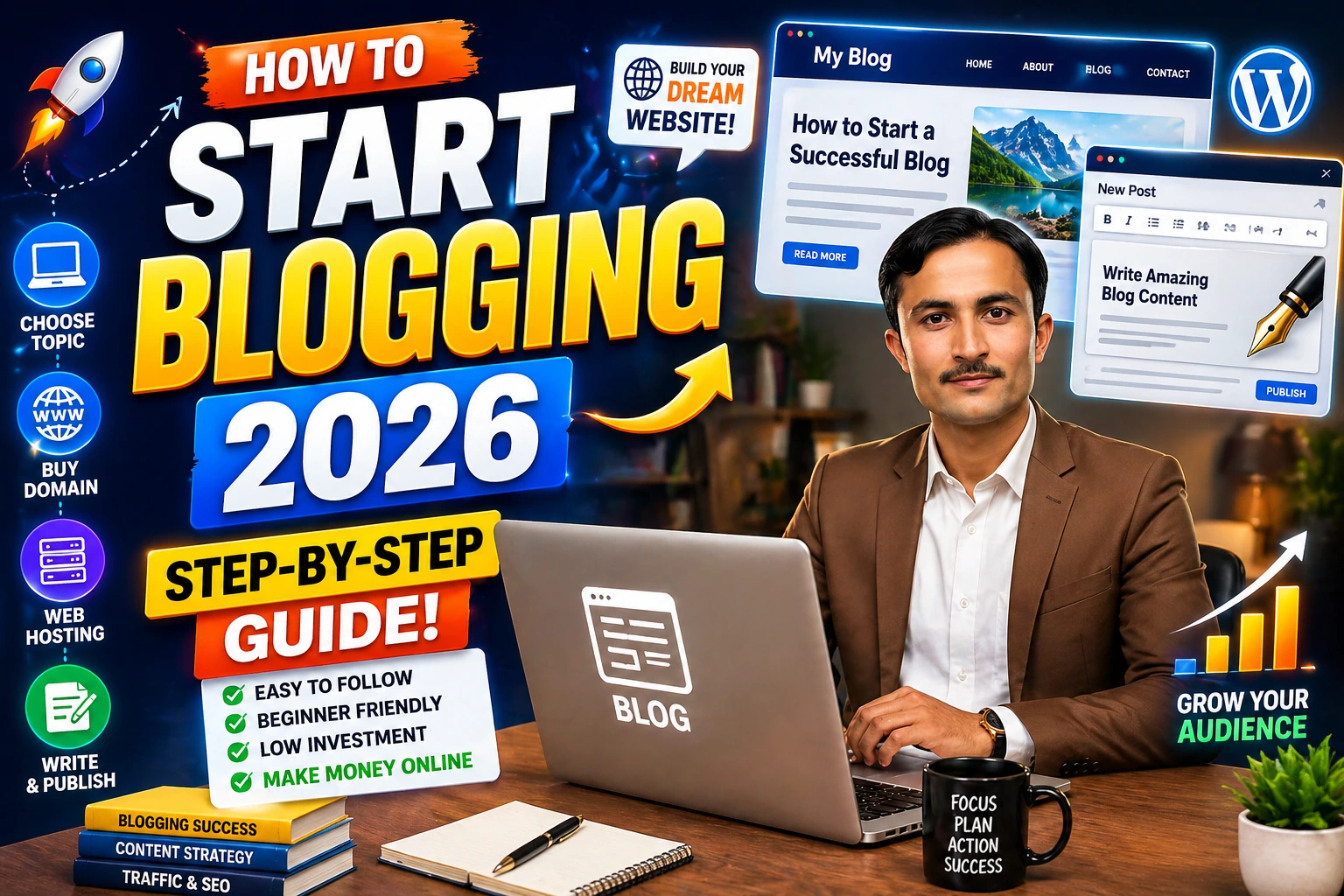
How to Start Blogging in 2026 (Step-by-Step Beginner Guide to Build a Successful Website)
Introduction
Blogging is one of the most popular ways to share knowledge and earn money online. In 2026, millions of people are starting blogs to build their personal brand, help others, and create a long-term source of income.
If you are a beginner, starting a blog may feel confusing. You might think you need technical skills or a big investment. But the truth is, anyone can start a blog with the right guidance.
In this complete guide, you will learn how to start blogging step by step, even if you have no experience. This article is written in simple English and follows AdSense-friendly guidelines.
What is Blogging?
Blogging means creating a website where you publish articles regularly.
Examples of Blog Topics
Education
Technology
Health
Finance
Travel
How to Start Blogging in 2026
Blogging has evolved tremendously over the past decade, and How to Start Blogging in 2026 (Step-by-Step Beginner Guide to Build a Successful Website) is no longer just about writing your thoughts online. Today, it’s a strategic digital asset that can generate passive income, establish authority, and connect you with a global audience. If you’re ready to launch a blog that stands out in the crowded online space of 2026, this comprehensive guide will walk you through every critical step.
Why Blogging in 2026 Is Different
Before diving into the nuts and bolts, understand that 2026 demands more than basic writing skills. Search engines now prioritize user experience, AI-generated content transparency, video integration, and voice search optimization. Successful bloggers blend authentic human insight with smart technology. With that foundation, let’s break down the exact process.
Step 1: Choose a Profitable Niche with Long-Term Potential
The first move in How to Start Blogging in 2026 (Step-by-Step Beginner Guide to Build a Successful Website) is selecting a niche. Avoid overly broad topics like “lifestyle” or “travel.” Instead, focus on a sub-niche that solves specific problems. Examples include:
Sustainable pet products for urban dwellers
AI productivity tools for remote teams
Plant-based meal prep for busy parents
Mental health strategies for freelancers
Use tools like AnswerThePublic, Google Trends, and Reddit to validate demand. In 2026, micro-niches with passionate audiences outperform generic blogs. Ensure you have genuine interest; authenticity is your competitive advantage.
Step 2: Secure a Domain Name and Hosting (2026 Edition)
Your domain is your digital real estate. Keep it short, memorable, and keyword-rich. Avoid numbers and hyphens. For example, “EcoPetHacks.com” beats “Best-Eco-Friendly-Pet-Tips-2026.com.”
Hosting in 2026 has shifted toward speed and sustainability. Look for providers offering:
LiteSpeed servers for instant loading
Built-in AI caching and CDN integration
Green hosting (carbon-neutral data centers)
One-click WordPress or Ghost installation
Recommended hosts: Cloudways (for flexibility), SiteGround (for beginners), or Rocket.net (for premium speed). Shared hosting is fading; opt for cloud or managed WordPress hosting from day one.
Step 3: Set Up Your Blogging Platform
Three platforms dominate 2026:
WordPress.org (still the king – 45% of the web)
Ghost (for minimalist writers and membership sites)
Webflow (for designers who code less)
For most beginners following How to Start Blogging in 2026 (Step-by-Step Beginner Guide to Build a Successful Website), WordPress remains the best choice. Install WordPress via your host’s control panel. Choose a lightweight theme like GeneratePress or Kadence – both are fast, responsive, and SEO-optimized out of the box.
Step 4: Design for Engagement and Accessibility
In 2026, design isn’t just about looks; it’s about Core Web Vitals and inclusive accessibility. Follow these principles:
Use a clean, white-space-rich layout
Ensure 3:1 color contrast for text
Add alt text to every image automatically with AI plugins
Implement dark mode toggle for night readers
Use sticky table of contents for long posts
Install essential plugins (but keep them under 10 for speed):
RankMath SEO (replaces Yoast in 2026)
Wordfence (security)
WP Rocket (caching)
AIOSEO (schema markup)
Step 5: Craft High-Quality, AI-Assisted Content
Content remains king, but 2026’s king collaborates with AI. Use tools like Jasper, Claude, or ChatGPT-5 to outline, research, and draft. However, never publish raw AI text. Add your personal stories, case studies, and unique data. Google’s 2026 algorithms penalize purely generated content while rewarding “human-AI hybrid” writing.
Each blog post should include:
A skimmable intro (under 100 words)
H2 and H3 subheadings every 200 words
Bullet points or numbered lists
Embedded video (even a 30-second Loom adds trust)
Internal links to your other posts
External links to credible sources
A clear call-to-action (subscribe, comment, buy)
Aim for 1,500–2,500 words per pillar post. Update content every 6 months – freshness is a ranking factor.
Step 6: Master SEO for 2026 Search Engines
No guide to How to Start Blogging in 2026 (Step-by-Step Beginner Guide to Build a Successful Website) is complete without modern SEO. Beyond keywords, focus on:
Search Intent: Are users looking for “how to,” “best,” or “reviews”? Match it exactly.
Voice Search Optimization: Write conversational FAQ sections. “What’s the best eco-friendly cat litter?” not “Best eco-friendly cat litter product review 2026.”
Video Snippets: Embed YouTube videos with transcripts – Google loves mixed media.
Entity SEO: Use related terms (LSI keywords) naturally. For “vegan meal prep,” include “plant-based grocery list,” “tofu marinade,” “batch cooking containers.”
Schema Markup: Add FAQ, HowTo, and Article schema via RankMath.
Perform keyword research using Ahrefs, SEMrush, or the free Google Keyword Planner. Target long-tail keywords with low competition and high intent.
Step 7: Develop a Monetization Strategy (Start Early)
Many wait until they have traffic, but smart bloggers integrate monetization from day one. Options for 2026:
Affiliate Marketing: Join ShareASale, Amazon Associates, or Impact. Promote products you already use.
Digital Products: E-books, Notion templates, Lightroom presets, or courses.
Membership Tiers: Offer exclusive content via MemberPress or Patreon.
Sponsored Posts: Use platforms like Linqia or #paid once you hit 5k monthly sessions.
Display Ads: Apply to Mediavine or AdThrive (need 50k+ sessions) or start with Ezoic (10k sessions).
Diversify income streams. For example, a food blog might earn via ads, affiliate kitchen tools, a paid recipe e-book, and a meal-planning app subscription.
Step 8: Promote Your Blog Consistently
Build a content distribution engine:
Pinterest (still huge for visual niches – use Tailwind)
YouTube Shorts repurpose blog tips into 60-second videos
LinkedIn for B2B or professional niches
Reddit (add value, never spam)
Email Newsletter – your most valuable asset. Start with ConvertKit or Beehiiv.
In 2026, social media algorithms favor communities over broadcasters. Engage genuinely. Reply to every comment. Join niche Slack or Discord groups. Collaborate with other bloggers via roundups, guest posts, or joint webinars.
Step 9: Analyze, Iterate, and Scale
Install Google Analytics 4 (Universal is dead) and Google Search Console. Review monthly:
Top-performing pages (update them)
Bounce rate (improve intro readability)
Click-through rate (tweak meta titles)
Conversion rate (test CTAs)
Scale by batching content (write 4 posts in one day), outsourcing (hire a VA for Pinterest/promotion), and repurposing (turn a blog post into a Twitter thread, LinkedIn carousel, and TikTok script).
Step 10: Stay Compliant and Future-Proof
Finally, protect your hard work:
Add privacy policy, terms of service, and cookie consent (use Complianz)
Disclose affiliate links (FTC rules are stricter in 2026)
Register copyright for your best content
Use DMCA protection for images
Keep WordPress and plugins auto-updated
Conclusion: Your Blogging Journey Starts Today
Following How to Start Blogging in 2026 (Step-by-Step Beginner Guide to Build a Successful Website) is not a get-rich-quick scheme. It requires patience, consistency, and a willingness to learn. But the rewards – freedom, income, impact – are real. Start by securing your domain tonight, publish your first post within a week, and commit to one article every week for the next six months. The best time to start blogging was ten years ago. The second best time is now – in 2026.
Conclusion
Blogging is a powerful way to build your online presence and earn money in 2026. With the right strategy and patience, anyone can succeed.
Start small, focus on quality, and stay consistent. Your blog can grow into a successful online business over time.